

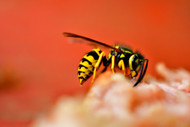
Why Wasp Spray for Self-Defense Against Humans Won't Work: A Chemist Explains
Why Wasp Spray for Self-Defense Won’t Work Against Humans
- Wasp spray is not designed to stop human attackers and does not reliably incapacitate people.
- Its effects are inconsistent and unpredictable, making it a poor choice in a real self-defense situation.
- It can pose health risks to you and others nearby, especially when used indoors.
- Pepper spray is specifically formulated for self-defense, delivering a fast, involuntary eye closure response that deters threats.
- Pepper spray is tested, regulated, and legally recognized, while wasp spray is not intended or approved for defensive use.
Recommendations of wasp spray as a home or self-defense tool circulate regularly on social media and in self-defense forums. The appeal makes sense on its own: wasp spray is inexpensive, widely available and capable of projecting a stream at distances up to 20 feet. For people unfamiliar with the legal and practical aspects of owning pepper spray, it can appear to be a reasonable alternative.
However, wasp spray is not a reliable self-defense tool against humans, from both a chemical and physiological standpoint. It is not formulated to incapacitate people; it poses unpredictable health risks to anyone in the area, and it has no established testing or regulatory framework for use against human attackers.
The Chemistry of Wasp Spray
Wasp and hornet sprays use pyrethrins or pyrethroids as their active ingredients. Pyrethrins are derived from chrysanthemum plants, while pyrethroids are the synthetic alternative engineered for greater stability and longer residual effect. Both are designed to disrupt the nervous system of insects — organisms that are far smaller and more chemically sensitive than humans.
The mechanism works as follows: pyrethrins and pyrethroids bind to sodium channels in nerve cell membranes, preventing them from closing normally. In insects, this causes rapid paralysis and death. Humans, with our significantly more complex nervous systems, are far less sensitive to these compounds at the concentrations present in a consumer canister — typically between 0.04% and 0.06% active ingredient. That concentration is calibrated to kill a creature that weighs a fraction of a gram.
A person sprayed with wasp or bug spray will experience minor eye irritation, at best, but that is not the same as incapacitating someone. This is a critical difference when considering self-defense aids. Stopping a motivated attacker requires a rapid physiological response and the active compound concentration in wasp spray is not sufficient to reliably produce that response in a human being.
"Wasp spray is formulated to a specification that kills insects. The active ingredient concentrations are calibrated for that purpose — not for human physiology," says Nicole Robbins, Quality Assurance and Safety Manager, SABRE. "When we formulate a defense spray, every canister has to meet a verified concentration standard. There is no equivalent standard for wasp spray against humans because it was never designed for that use. In self-defense, reliability is everything, and wasp spray cannot offer that."
That last point bears emphasis. No testing framework exists to evaluate wasp spray's effectiveness against human attackers. Wasp spray was designed, tested, and approved for one purpose: killing insects. Any claim about its effectiveness against humans is at best anecdotal.
The Dangers of Wasp Spray to Humans
The health risks associated with pyrethroid exposure are real — but they do not work in the way self-defense requires.
Symptoms of pyrethroid exposure in humans include eye irritation, skin tingling or numbness, nausea, dizziness and respiratory distress. Individuals with asthma or other pre-existing respiratory conditions face elevated risk. In enclosed spaces, inhaled aerosol can cause throat irritation, headache and, in cases of prolonged or heavy exposure, more serious neurological effects. Pyrethroids are also highly toxic to cats, making accidental indoor discharge a concern in households with pets. However, the low levels of pyrethroid in wasp spray generally do not provide any real stopping power or danger to human health. (Note: If you were to inhale in large amounts, such as when deploying inside, or otherwise swallow the chemical, seek medical attention immediately.)
The critical problem with these effects in a self-defense context is their nature: they are slow to onset, variable across individuals and entirely unpredictable in a dynamic situation. In a home defense scenario, wasp spray discharged indoors does not travel only toward the attacker. The aerosol disperses, and the person deploying the spray, other occupants and pets face exposure risk.
Compare that to the mechanism of purpose-built defense sprays, like pepper spray and pepper gel, which deliver a consistent, immediate physiological response. That consistency is the entire basis on which pepper spray was developed and adopted by law enforcement and for use as a personal safety device.
Wasp Spray vs. Pepper Spray
Proponents of wasp spray for self-defense will sometimes compare it to pepper spray – both are sprays and both are made with compounds that cause irritation. However, this is the only way they are similar.
Pepper spray and pepper gel are formulated using oleoresin capsicum, an oily resin derived from hot peppers. The active component, capsaicin, binds to TRPV1 receptors in human tissue — the same receptors responsible for detecting heat and pain. The result is an immediate and overwhelming inflammatory response in the eyes, nose, throat and respiratory tract that the body cannot override. The effects include involuntary eye closure, intense burning, swelling of mucous membranes, nasal discharge, coughing and shortness of breath. They are automatic physiological responses that interrupt an attacker's ability to continue regardless of intent or pain tolerance.
Wasp spray does not produce this category of response in humans. Its compounds are calibrated for insect biology. It has no verified stopping standard for human targets because it was never designed with that application in mind. The effects it does produce in humans, when they occur at all, are mild, inconsistent and slow relative to what a self-defense situation demands.
On Range
Range is the most commonly cited argument in favor of wasp spray. Some canisters project a stream beyond 20 feet, and that distance is part of the appeal. What that comparison overlooks is that extended-range pepper gel formulations are specifically engineered to close that gap — while also accounting for blowback and wind, variables that wasp spray does not address.
Compact pepper spray units may have a shorter stream, but they are built for rapid deployment under stress, not for reaching a stationary hive from a safe distance. The use cases are not equivalent, and range alone is not a meaningful measure of self-defense effectiveness.
There is also a deployment design. Pepper spray and pepper gel are built for rapid access and one-handed use under stress. In a situation where seconds matter, the ergonomics of the tool are not a secondary consideration.
Consistency
Every batch of pepper spray from a reputable manufacturer is tested to verify that it contains a guaranteed concentration of capsaicinoids — the compounds responsible for its stopping effect.
Let’s take SABRE, for example. SABRE reliability and quality testing processes illustrate the best-in-industry standards. Each batch of pepper spray and pepper gel from SABRE is tested in an in-house High Performance Liquid Chromatography (HPLC) laboratory — the only technology capable of verifying active ingredient concentration with precision. That matters because, according to an independent study conducted by the University of Utah, pepper sprays without HPLC verification have been shown to deliver inconsistent capsaicinoid levels. SABRE's HPLC process eliminates that variability, guaranteeing every canister meets SABRE’s heat specifications. Production units are also submerged in a temperature-regulated 120°F water bath to verify seal integrity under pressure. If a canister does not pass, it does not leave the facility. Products are further test-fired after exposure to extreme temperatures, from below freezing to 120°F, to confirm reliable performance across conditions.
Wasp spray has no such standard or similar quality assurance. Formulations vary by brand and product line. The active ingredient concentration is calibrated for insect mortality, not human incapacitation.
Legal Considerations of Wasp Spray vs. Pepper Spray
Pepper spray is legally recognized as a self-defense tool in all 50 states, subject to state-specific regulations governing concentration, container size, and who may carry it. It exists within a defined legal and regulatory framework that has been developed over decades of law enforcement use and legal precedent.
Wasp spray carries no equivalent designation. It is a pesticide, and its label explicitly identifies it as hazardous to humans. The circumstances of any self-defense situation are fact-specific, and legal outcomes vary by jurisdiction. What is consistent is that a purpose-built defense product — tested, labeled and legally recognized for defensive use — introduces far fewer variables than an improvised alternative.
Selecting the Right Self-Defense Tool
Effective self-defense preparation means selecting tools that have been formulated for use against humans, independently tested and verified for the specific application. Pepper spray and pepper gel meet that standard. They have a documented track record in law enforcement, a consistent and verified mechanism of action, and a legal framework that supports their use. Personal alarms and stun guns offer additional options for those who prefer non-spray alternatives.
Wasp spray meets none of those criteria. It is a pesticide that causes unpredictable, inconsistent effects in humans, poses collateral exposure risk to the person using it and everyone nearby, and has no testing standard relevant to self-defense performance. The perception that it is a practical improvised option is not supported by chemistry, physiology or the record of how self-defense tools are evaluated and adopted.
The right tool for self-defense is one that was built for the purpose.
Editor’s note: If you need immediate help after wasp spray is discharged indoors, evacuate the area immediately, ventilate the space and contact Poison Control at 1-800-222-1222 if symptoms develop.
Wasp Spray and Humans FAQs:
Why was the attempted robbery unsuccessful with wasp spray?
Wasp spray is designed to disrupt a wasp's nervous system, not a human’s - therefore, it was not successful.
Why is wasp spray ineffective for self-defense against humans?
The active ingredients in wasp spray are only minimally irritating to human eyes, making it insufficient for stopping a goal-oriented attacker.
What makes pepper spray a better choice for self-defense?
Pepper spray is specifically designed for use on humans, targeting the eyes and respiratory system, causing involuntary eye closure, swelling, and other incapacitating effects.
How effective is SABRE pepper spray for self-defense?
SABRE is the #1 pepper spray trusted by law enforcement and consumers globally, formulated for maximum stopping power.Backed by independent laboratory testing and SABRE’s industry exclusive in-house HPLC lab, SABRE guarantees consistent, maximum strength capsaicinoid levels in every canister to help give you peace of mind, confidence, and safety when you need it most.
What are the potential effects of accidentally spraying wasp spray indoors?
Accidentally spraying wasp spray indoors is described as a hassle but not causing immediate problems for humans. Proper ventilation is recommended to dissipate the spray. Editor’s note: If you need immediate help after wasp spray is discharged indoors, evacuate the area immediately, ventilate the space and contact Poison Control at 1-800-222-1222 if symptoms develop.
What are the active ingredients in wasp spray?
The active ingredients in wasp spray are mentioned to be 0.04% to 0.06% pyrethrin or pyrethroids, which come from a species of chrysanthemum plant.
What are the effects of pepper spray on humans?
Pepper spray causes involuntary eye closure, swelling of mucous membranes, nasal and sinus discharge, coughing, shortness of breath, and psychological effects such as fear and anxiety.
What types of pepper spray products does SABRE offer for self-defense?
SABRE offers various formulas and models of pepper spray, including pepper spray and gels with snap-clips and QuickRelease™ keychains, compact Mighty Discreet™ pepper sprays, tactical pepper gel with Crossfire technology, runner pepper gel with adjustable hand straps, and Defense Sprays with Advanced 3-in-1 Formulas. SABRE also offers non-pepper spray self-defense products such as personal alarms and stun guns.
Is SABRE pepper spray safe for use on humans?
Pepper spray causes involuntary eye closure, swelling of mucous membranes, nasal and sinus discharge, coughing, shortness of breath, and psychological effects such as fear and anxiety. It should only be used as a means of self-defense.
To see a demonstration of Wasp Spray vs. Pepper Spray Watch here: https://www.youtube.com/watch?v=9Uy9MnQfk_0