

Seatbelt Cutters and Other Emergency Tools Every Driver Should Have
A vehicle emergency can take many forms: a collision that leaves a seatbelt locked and a door jammed, a breakdown on an isolated stretch of highway, or an aggressive threat from another person. There are inexpensive and practical tools drivers can purchase to help them respond confidently during roadside emergencies or unexpected threats.
1. Seatbelt Cutter
A seatbelt cutter is one of the most critical emergency automotive tools a driver can carry. In a serious collision, seatbelts can jam or malfunction under tension and trap occupants inside the vehicle. It uses a recessed blade designed to slice through webbing cleanly without requiring significant force — an important feature when mobility may be limited after a crash. It is worth noting that seatbelts remain the single most effective protection in a collision. A cutter exists for the dangerous scenario where one becomes an obstacle to escape. Look for a cutter with an ergonomic grip that can be operated with one hand.
2. Glass Breaker
Doors can become inoperable after a collision due to frame damage or electrical failure in power door systems. A glass breaker provides a reliable exit option when doors won't open. Most are designed with a hardened steel or carbide tip that concentrates force into a small point or can be swung into the window, allowing a driver or passengers to break tempered side windows with a single strike.
3. Multi-Function Escape Tool
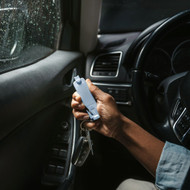
Many emergency automotive tools combine multiple features in a single unit. Models like the SABRE Escape 3-in-1 Car Escape Tool integrated a seatbelt cutter and spring-loaded window breaker with an LED light that delivers a bright, steady beam for visibility in low-light or dark conditions. Another SABRE device is the SABRE Escape 3-in-1 Pepper Gel with Seat Belt Cutter and Window Breaker, which offers a third layer of utility with the integrated pepper gel for protection in situations that involve unexpected threats from a roadside confrontation.
The 3-in-1 Car Escape Tool can be kept in the car at all times, while the similar tool with pepper gel is better kept in a purse or bag that is removed from the car when it’s not in use. The prolonged heat exposure of a hot car can compromise aerosol pressure and affect product performance. Canisters exposed to temperatures exceeding 120 degrees can explode.
4. Pepper Spray or Pepper Gel
For drivers who want dedicated defense capability separate from an escape tool, a standalone pepper spray or pepper gel is worth considering. Pepper gel has a practical advantage in vehicle environments — its thicker consistency clings to a target on contact rather than dispersing as a fine mist, reducing the risk of blowback and unintended exposure to others in the vehicle. Either option provides a less-lethal response to a threat encountered during a breakdown or other roadside aggression. As with all aerosol-based products, do not keep them in the car as storage away from direct heat and sunlight is essential to maintaining effectiveness.
5. First Aid Kit
A compact first aid kit is a foundational piece of any vehicle emergency kit. Post-collision injuries often involve lacerations and having gauze, bandages and antiseptic wipes on hand can reduce blood loss while waiting for emergency services. Look for a kit rated for automotive use that includes a tourniquet and trauma dressing in addition to standard supplies.
6. Reflective Warning Triangles or Road Flares
After a crash or breakdown, alerting other drivers to a stopped vehicle is critical for preventing secondary accidents. Reflective warning triangles are reusable and easy to deploy, while road flares provide higher visibility in low-light conditions. Most safety guidelines recommend placing warning devices at least 200 feet behind a stopped vehicle on high-speed roadways.
7. Flashlight
Accidents and breakdowns do not always happen in daylight. A dedicated flashlight stored in the vehicle provides reliable illumination for assessing damage, signaling for help or navigating a dark roadside environment. The SABRE Escape 3-in-1 Car Escape Tool comes equipped with an LED light that includes an emergency strobe mode designed to single for attention.
8. Jumper Cables or a Jump Starter
A dead battery is one of the most common roadside emergencies. Jumper cables require a second vehicle to function, while a portable jump starter allows a driver to restart a vehicle independently. Compact lithium-ion jump starters are now widely available and can fit in a glove compartment or center console.
Keeping Tools Accessible
In a post-collision escape or an unexpected threat, there is no time to exit the vehicle and open a trunk. Automotive emergency tools like seatbelt cutters, glass breakers and pepper gel should be stored in a center console, door pocket or visor-mounted holster — somewhere a driver or passenger can reach them immediately without leaving the seat. Items like first aid kits, jumper cables and warning triangles can be stored in a trunk or cargo area without compromising their usefulness.
Being prepared for roadside emergencies or unexpected threats does not require an extensive kit. A few well-chosen tools, stored where they can be reached quickly, cover the most common and most critical scenarios a driver is likely to face.