

What's In Bear Spray? How Does Bear Spray Work?
Bear spray is a tool to help keep you safe in the unlikely event of a bear encounter and it is widely recommended by experts for anyone traveling outdoors in bear country.
SABRE offers a library of coverage on bear spray: from Bear Spray 101 to What To Do If You Encounter a Bear. We also cover where you can purchase bear spray, why it’s recommended over firearms, and even an article on the differences between bear spray, personal pepper spray and dog spray.
In this article, we’ll answer the question: What exactly is in bear spray?
What’s in bear spray?
The active ingredient in bear spray is Oleoresin Capsicum (OC).
What Is Oleoresin Capsicum?
OC is an oil-based extract derived from chili peppers. It contains capsaicinoids – the compounds that produce the heat and irritation associated with peppers, and is widely used as the active ingredient in bear spray due to its shown ability to overwhelm the senses of approaching animals, giving the user time to get to safety.
How does OC affect bears?
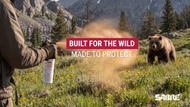
When bear spray is deployed, it releases a concentrated cloud of Oleoresin Capsicum, which contains capsaicinoids and causes intense irritation. In bears, OC rapidly inflames the eyes, nose, throat and lungs, overwhelming their respiratory system and sense of smell.
The result is a temporary sensory disruption that can stop a charge and deter further approach.
Importantly, OC does not rely on pain alone. Instead, it interferes with a bear’s ability to see, smell, and orient itself, creating an opportunity for the animal to disengage, ideally without causing permanent injury. This sensory-based response is why OC is widely accepted by wildlife experts as an effective, non-lethal deterrent.
Is all OC the same?
Consistency in Oleoresin Capsicum formulation is important to how bear spray performs in real-world situations. A reliable deterrent depends on delivering the expected level of effectiveness every time; inconsistent OC potency can lead to unpredictable results.
To account for potential variables, responsible manufacturers like SABRE rely on standardized testing to verify potency and ensure each batch meets established specifications. In fact, SABRE leads the industry in its quality assurance process. This testing-focused approach helps confirm that the formulation performs as intended, supporting predictable and dependable deterrence in the field.
How does bear spray differ from pepper spray?
While they share the same active ingredient (OC), bear spray should not be used on a human and pepper spray can be ineffective against a bear. (Read more: Pepper Spray Versus Bear Spray) Bear spray is almost 50% stronger and has a range of up to four times that of pepper spray.
How do I measure bear spray strength?
Bear spray, like pepper spray, is commonly described using three different measurements: OC percentage, Scoville Heat Units (SHUs) and Major Capsaicinoids (MCs). A recent article, Evaluating Pepper Spray Strength: The Myth of SHUs, breaks down that while all three may appear on product labels or marketing materials, they do not provide the same level of accuracy. OC percentage simply reflects how much Oleoresin Capsicum is included in the formula, not how potent it is. SHUs measure the heat of the raw pepper extract before it is diluted into a spray, which can be misleading since OC typically makes up only a small portion of the final formulation.
Major Capsaicinoids are widely considered the most reliable way to measure pepper spray strength because they represent the true potency of the finished product. MCs account for the concentration of capsaicinoid compounds responsible for the spray’s effects and are recognized by the U.S. Environmental Protection Agency as the standard for evaluating strength. Most personal defense sprays fall between 0.18% and 1.33% MC, while bear spray typically measures between 1% and 2% MC. At these higher levels, bear spray is formulated specifically for wildlife deterrence and is not legal for use against human attackers.
Is OC or bear spray safe for use against bears and the environment?
Bear spray is designed to deter bears without causing permanent harm. It temporarily irritates their eyes, nose and lungs, leading them to retreat. It is generally safe for use in an outdoor, natural environment. Products like SABRE’s Frontiersman Max are even EPA-registered.
Understanding what’s inside bear spray helps explain why it is such a trusted safety tool in bear country. Oleoresin Capsicum is the foundation of bear spray’s effectiveness, delivering a powerful but temporary sensory disruption that deters bears without causing lasting harm. By choosing a product designed specifically for bears and understanding how it works, outdoor travelers can feel more confident and prepared when spending time in bear habitat.